AI Fintech Revolution: How AI is Transforming Financial Products for Startups
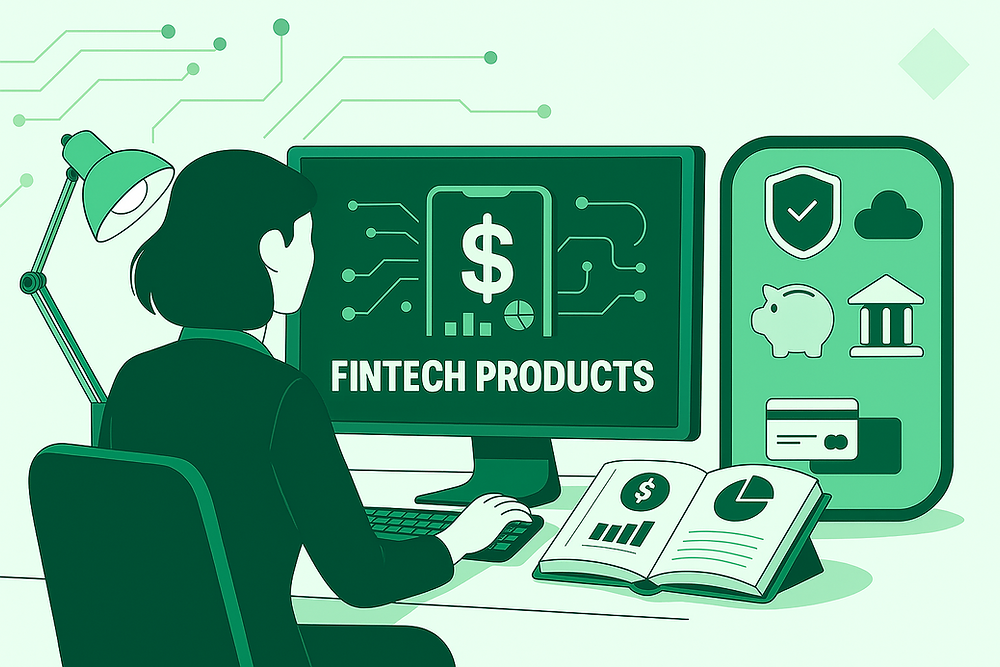
The financial technology landscape is undergoing a fundamental transformation. Traditional banking systems that once took days to process loans now deliver decisions in seconds. Payment platforms predict and prevent fraud before transactions complete. Investment advisory services that were once exclusive to high-net-worth clients are now accessible through mobile apps powered by sophisticated algorithms.
Take Chime's SpotMe feature, while traditional banks were still manually reviewing overdraft requests (and charging $35 fees), Chime built an ML model that analyzes spending patterns and predicts when users need a small cushion. The result? Instant micro-overdrafts with zero fees. That's not just better UX, it's a fundamentally different product enabled by real-time risk assessment.
Or consider how Klarna processes 2 million transactions daily with fraud rates below 0.1%. Their system doesn't just check if your card is valid, it analyzes 1,000+ data points in milliseconds, from how you hold your phone to whether you're shopping at your usual time. Traditional payment processors still can't match this.
AI Fintech Product Development & Innovation Solutions
Building AI-powered fintech products requires more than plugging machine learning models into existing systems. The most successful implementations combine domain expertise in financial services with deep technical knowledge of AI architectures, regulatory compliance frameworks, and scalable infrastructure design.
Building AI Fintech Products That Actually Work
Most AI fintech projects fail not because of bad algorithms, but because teams treat AI like a feature you can bolt onto existing systems. It doesn't work that way.
The Reality Check: When we built the algorithmic trading system for 2Moon Capital, the challenge wasn't the ML models, it was designing an architecture that could execute trades in microseconds while simultaneously learning from market patterns. The system needed to integrate with Interactive Brokers' API, handle real-time data feeds, and make split-second decisions without human intervention.
Here's what actually matters:
Start Narrow, Scale Fast Instead of "AI-powered banking," focus on one problem where AI creates 10x value. Revolut started with instant spending notifications and travel insurance suggestions—not a full AI banking suite. Once that worked, they expanded.
Your Data is Your Moat Generic ML models won't differentiate you. Nubank in Brazil approved millions of credit cards for people with no credit history by analyzing utility payments and phone usage patterns. That's proprietary data intelligence, not off-the-shelf AI.
Real AI Fintech Products
Payments That Think
Fraud Detection That Actually Detects Fraud Stripe Radar blocks 99.9% of fraud while approving legitimate transactions that traditional systems would flag. How? Instead of simple rules ("decline if IP address doesn't match"), it uses graph neural networks to map relationships between accounts, devices, and merchants. When one merchant in a fraud ring gets flagged, the entire network gets scrutinized.
We've implemented similar network analysis for payment processors. The trick is handling the computational overhead—analyzing network graphs in real-time requires careful database architecture and caching strategies that most teams underestimate.
Smart Routing That Saves Money Payment routing sounds boring until you realize Adyen saves merchants 3-5% on every transaction by dynamically selecting the cheapest payment rail. Their system predicts approval probability across different processors and routes accordingly. For a company processing $100M annually, that's $3-5M in savings.
Banking That Adapts to You
Predictive Banking BBVA's Bconomy doesn't just show your balance—it predicts what you'll spend next week based on recurring bills, historical patterns, and upcoming calendar events. Users get alerts like "You'll be $200 short for rent based on your current spending" five days before it happens.
We've built similar predictive systems at Leanware for neobanks. The challenge isn't the prediction model, it's the UX. Nobody wants 50 notifications. The system needs to learn which predictions actually change user behavior.
Automated Financial Health Dave (now merged with Albert) uses ML to spot when users are about to overdraft and automatically moves money from savings. It's learned that users prefer small, automatic interventions over large, manual ones. The algorithm isn't complex—what's complex is the plumbing to move money between accounts instantly and the business logic to avoid infinite loops.
Lending Without Limits
Credit Scoring That Works Affirm approves loans in seconds by analyzing 1,000+ data points, not just FICO scores. Their models learned that someone who pays their phone bill on time for 3 years is a better risk than someone with a 700 FICO but spotty payment history.
We've built custom credit scoring for alternative lenders. The breakthrough isn't the model architecture—it's figuring out which alternative data sources actually predict default. Spoiler: app usage patterns beat social media sentiment every time.
Loan Underwriting at Scale LendingClub processes loan applications in minutes using ML models trained on millions of historical loans. Traditional banks take days because humans review every application. The AI doesn't replace underwriters—it handles the obvious approvals and denials, letting humans focus on edge cases.
Wealth Management for Everyone
Robo-Advisors That Beat Humans Betterment's tax-loss harvesting algorithm checks portfolios daily for tax-saving opportunities. It's found $2.8 billion in tax losses for users—work that would require armies of accountants. The system doesn't just minimize taxes; it learns each user's tax situation and optimizes accordingly.
Algorithmic Trading That Works Renaissance Technologies uses ML to spot market inefficiencies that last milliseconds. Their Medallion Fund averaged 66% annual returns for 30 years. While that level of sophistication is rare, we've built algorithmic trading systems for firms like 2Moon Capital that use similar principles: find patterns, execute instantly, learn continuously.
The Tech Stack That Actually Matters
Forget the "best practices" articles, here's what we've learned building production AI fintech systems:
Real-Time ML Pipelines:
- Feature stores that don't lag: Traditional databases can't handle the write throughput for real-time features. We use Redis for hot features (last 10 transactions) and Cassandra for warm features (90-day spending patterns).
- Model serving that scales: Deploying models is easy. Serving predictions for 100,000 concurrent users without latency spikes is hard. We use containerized models with horizontal auto-scaling and aggressive caching.
- Monitoring that catches drift: ML models degrade silently. We track prediction distributions, input data stats, and business metrics continuously. When a credit model's approval rate jumps 15% overnight, something's wrong—even if accuracy looks fine.
APIs That Don't Break, we've built API layers for multiple fintech products, the pattern is consistent:
- Versioning from day one (breaking changes will happen)
- Rate limiting by user tier (fraud prevention)
- Comprehensive logging (regulatory requirement, not optional)
- Circuit breakers (when dependencies fail, fail gracefully)
- Security That Passes Audits PCI-DSS compliance isn't a checklist—it's an architecture philosophy. Data encryption at rest and in transit is table stakes. What matters more:
- Zero-trust networking (every service authenticates every request)
- Audit trails for everything (who did what, when, why)
- Secrets management (no hardcoded keys, ever)
- Automated compliance monitoring (manual audits catch problems too late)
What's Actually Next To Come
Edge Computing for Instant Decisions Processing fraud detection on users' phones instead of servers cuts latency from 100ms to 10ms. That matters for real-time payment authorization. Apple Card does this, your phone makes the initial fraud assessment before even contacting servers.
Federated Learning for Privacy Train ML models on user data without ever seeing that data. Google's Gboard learns from your typing without sending your messages to servers. The same principle applies to banking—learn from spending patterns across millions of users while keeping individual data private.
Explainable AI (Actually Required Now) European regulators now require that AI credit decisions be explainable. "The model said no" isn't acceptable. Systems need to show which factors influenced decisions and allow users to challenge them. This isn't just compliance—it's better product design.
Our Approach: AI That Ships
We've built AI fintech products for algorithmic trading (2Moon Capital), transcription automation (BackupTyping), and financial management (Elephant CPA). Here's what we've learned:
Speed Matters More Than Perfection The best ML model is useless if it takes 18 months to build. We start with simple models that work, then iterate based on real user data. Our average MVP timeline is 3 months—fast enough to test market fit before burning capital.
70% Test Coverage Isn't Negotiable Financial products can't have bugs. We maintain 70%+ automated test coverage on new code. Not because we love testing, but because manual QA can't catch edge cases in ML systems.
Integration Beats Innovation The fanciest ML model means nothing if it can't integrate with existing banking cores, payment processors, and regulatory reporting systems. We've spent hundreds of engineering hours building connectors that "should be simple." They never are.
AI Fintech Platform Architecture
API-First Development enables rapid product iteration. Plaid's infrastructure powers thousands of fintech applications through standardized APIs, processing over 6 billion bank account connections without requiring custom integration work from partner applications.
Microservices Architecture isolates failure domains. Nubank's platform deploys hundreds of independent services, ensuring issues in non-critical systems don't cascade to core banking functions. They deploy changes thousands of times daily without maintenance windows.
Real-Time Data Processing enables instant experiences. Cash App's event streaming architecture processes spending, deposits, and investment transactions through Apache Kafka pipelines that maintain end-to-end latencies under 100 milliseconds.
AI Fintech Security & Compliance Framework protects sensitive data while enabling innovation. Stripe's PCI DSS Level 1 certified infrastructure encrypts cardholder data at rest and in transit, implementing defense-in-depth security while maintaining developer-friendly API interfaces.
Leading AI Fintech Product Innovators & Solutions
The AI fintech ecosystem includes established technology giants, specialized startups, and research institutions pushing boundaries of what's technically possible. Understanding the landscape helps identify partners, competitors, and potential acquisition targets.
Global AI Fintech Product Platforms
Pismo AI Fintech Platform Solutions provide core banking infrastructure for digital financial services. Their cloud-native platform powers dozens of neobanks and fintech applications, handling account management, transaction processing, and regulatory compliance through API interfaces.
Core Banking AI Integration modernizes legacy systems. Thought Machine's Vault core banking platform uses microservices architecture and machine learning to provide real-time banking capabilities, replacing mainframe systems at institutions like Lloyds Banking Group.
Payment Processing Innovation continues advancing transaction capabilities. Marqeta's modern card issuing platform enables on-demand card creation, real-time spending controls, and instant funding, powering payment innovations at companies like DoorDash and Instacart.
Specialized AI Fintech Product Developers
Remote Deposit Capture Solutions eliminate branch visits. Mitek's mobile check deposit technology processes billions of checks annually through computer vision that validates check authenticity, extracts account details, and detects fraud attempts with accuracy rates exceeding 99.5%.
Digital Payment Automation streamlines receivables. Bill.com's AI analyzes invoice data, matches payments to bills, and automates approval workflows, reducing accounts payable processing time by up to 50% while improving accuracy.
AI Fintech Data Processing extracts insights from unstructured financial data. Finicity aggregates data from over 16,000 financial institutions, normalizing transaction data and categorizing spending patterns to power budgeting, lending, and financial planning applications.
AI Fintech Technology Leaders
IBM AI Fintech Solutions bring enterprise-scale AI capabilities to financial services. Their Watson platform powers chatbots, fraud detection, and regulatory compliance solutions at major banks, though implementation complexity and costs often put these solutions beyond startup reach.
Columbia University AI Research Applications advance theoretical foundations of financial AI. Research from Columbia's Data Science Institute has contributed to improved credit scoring models, algorithmic trading strategies, and systemic risk assessment methodologies adopted across the industry.
Innovation in AI Fintech Products increasingly originates from specialized startups rather than incumbents. Companies like Alloy, Unit, and Modern Treasury are building the infrastructure layer that enables the next generation of embedded finance and vertical-specific banking solutions.
Startup-Focused AI Fintech Providers
Agile development capabilities enable rapid iteration cycles. Development partners who understand startup constraints can ship MVPs in 8-12 weeks rather than 6-12 months, validating product-market fit before committing to extensive technical investment.
MVP-to-scale approaches provide growth paths without architectural rewrites. Well-designed initial implementations anticipate scaling requirements, using technologies and patterns that support 10x or 100x growth without fundamental redesigns.
Cost-effective AI fintech implementation for startups balances sophistication with budget realities. Practical approaches might use pre-trained models for initial launches, implementing custom training only after validating core hypotheses with real user data.
Our team has developed AI-powered solutions spanning multiple fintech verticals—from building intelligent payment processing systems that reduced fraud rates by 40% to creating automated lending platforms that cut application processing time from days to minutes.
Their work includes developing real-time risk assessment engines, building conversational banking interfaces, and implementing machine learning models for credit scoring that expanded approval rates while maintaining portfolio quality. These implementations demonstrate how strategic AI integration creates measurable business impact rather than just technical sophistication.
Final Thoughts
AI Fintech products have moved beyond experimental pilots to production systems handling millions of daily transactions and billions in transaction value. The technology has proven its capability to improve fraud detection, expand credit access, personalize financial services, and reduce operational costs.
However, successful AI implementation requires more than sophisticated algorithms. The most impactful applications combine technical excellence with deep understanding of user needs, regulatory requirements, and business economics. They solve real problems rather than applying AI for its own sake.
Startups entering the fintech space face a unique opportunity. Incumbents carry legacy technology debt and organizational resistance to change. Meanwhile, modern development tools, cloud infrastructure, and specialized service providers have dramatically reduced the capital required to launch sophisticated financial products.
The competitive advantage comes not from having AI, but from applying it strategically to create user experiences and unit economics that incumbents can't match. This requires development partners who understand both the technical implementation and the business context—teams capable of translating ambitious product visions into production systems that scale.
Ready to build AI-powered fintech products that transform how people manage money? Our team combines technical expertise with fintech domain knowledge to help startups ship faster, scale smarter, and compete effectively against established players.
Schedule an AI Fintech consultation to discuss how AI capabilities can accelerate product development and create sustainable competitive advantages in increasingly crowded fintech markets.
FAQ
What does an AI fintech MVP actually include?
A real MVP (not a prototype):
- One core AI feature fully implemented (fraud detection, credit scoring, or robo-advisory)
- Production API with authentication, rate limiting, logging
- Cloud deployment with auto-scaling
- Basic regulatory compliance (data encryption, audit logs)
- Admin dashboard for monitoring}
Timeline: 3-6 months Cost: $150K-$300K Team: 3-5 engineers (backend, ML, frontend, DevOps)
You can start processing real transactions on day one. That's the point.
How do you handle compliance in AI systems?
Three layers:
- Architecture: Encryption, audit logs, and access controls built into every service
- Automation: Continuous monitoring for KYC/AML compliance, automated suspicious activity reports
- Explainability: Model decisions include factor analysis—not just "approved/denied" but "why"
We partner with compliance specialists for complex regulations (EU's AI Act, SEC rules for trading). The goal: pass audits without slowing development.
What's the real ROI timeline for AI fintech?
Based on our projects:
Quick wins (3-6 months):
- Fraud detection: 30-50% loss reduction
- Application processing: 80% faster approvals
- Customer support: 60% of queries automated
Longer payback (6-12 months):
- Credit scoring improvements: 15-25% lower default rates
- Robo-advisory: 10-20% better returns vs. passive investing
- Custom lending: 40%+ more approvals without increasing risk
The caveat: AI ROI depends on scale. Fraud detection that saves $10 per transaction matters at 100K transactions/month, not 1K.