CrewAI vs LangChain: Complete Developer Comparison

Artificial intelligence frameworks have quickly replaced other tech stacks. From autonomous customer support to automated trading systems, multi-agent AI development is reshaping how products are built and scaled. Two names that stand out in this space are CrewAI and LangChain. Both offer powerful ways to orchestrate large language models (LLMs) and design multi-agent systems, but they take different approaches.
For startups, engineering teams, and tech leads, choosing between CrewAI and LangChain isn’t about picking a winner. Instead, it’s about finding the right fit for your product, workflow, and growth stage.
This guide explores both frameworks, their strengths, and how they compare across different industries and use cases.
Startup AI Framework Development & Multi-Agent Solutions
Startups entering the AI space face a common challenge: how to integrate LLMs into real-world products quickly and reliably. Whether you’re building a digital assistant, automating workflows, or scaling a SaaS platform, frameworks like CrewAI and LangChain help connect AI models with business logic.
Custom AI Framework Development & Multi-Agent Implementation
Both tools support custom orchestration of multiple agents, meaning you can design AI systems that break down tasks, delegate them, and recombine results. Consulting firms and in-house teams often use CrewAI or LangChain to:
- Build multi-agent systems that collaborate on problem-solving.
- Create domain-specific LLM applications tailored to healthcare, fintech, or dev tools.
- Orchestrate agents that combine reasoning, data access, and workflow execution.
AI Framework Implementation & Multi-Agent Deployment
Beyond building, startups also need deployment-ready integrations. CrewAI and LangChain both support:
- API development and integration with existing systems.
- Cross-platform orchestration for SaaS products.
- Multi-agent system monitoring and scaling.
The goal is to help teams move from prototypes to production-ready applications with minimal friction.
AI Development Frameworks & Multi-Agent Technologies
At their core, CrewAI and LangChain both sit on top of advanced LLM technologies and provide orchestration for multi-agent workflows. The difference lies in how they structure that orchestration.
LangChain Framework & Multi-Agent Development
LangChain is modular. It’s designed around chains, graphs, and reusable components. Developers use LangChain to:
- Integrate multiple LLMs into a single workflow.
- Build LangGraph-based agent orchestration systems.
- Manage prompts, memory, and data sources with consistency.
This makes LangChain especially powerful for startups needing flexible, composable pipelines.
CrewAI Framework & Collaborative Agent Development
CrewAI focuses on role-based agents that collaborate as a team. Instead of thinking in chains, you define roles like “analyst”, “writer”, or “planner”, and CrewAI handles how they interact. This makes it strong for:
- Task delegation systems where multiple AI roles must coordinate.
- Team-based orchestration mimics how human teams operate.
- Scenarios where intelligence emerges from collaboration rather than linear flow.
AutoGen Framework & Conversational Agent Development
While not the main focus here, AutoGen deserves mention. It specializes in multi-agent conversations, with dynamic agent interaction and human-in-the-loop design. Startups often combine AutoGen with CrewAI or LangChain to handle autonomous dialogues.
Industry-Specific Agent Solutions
Both frameworks have proven useful across industries:
- Tech startups: AI coding assistants, CI/CD automation, devops bots.
- FinTech: Trading bots, risk analysis, financial workflow automation.
- HealthTech: Patient support, clinical documentation, healthcare workflow orchestration.
Technology Platforms & AI Framework Infrastructure
Choosing an AI framework also means choosing where and how it runs.
Cloud AI Framework & Multi-Agent Solutions
Both CrewAI and LangChain can be deployed on AWS, Azure, or Google Cloud. Multi-cloud flexibility ensures scalable infrastructure, with options for containerized deployment, Kubernetes orchestration, and serverless APIs.
AI Framework & Multi-Agent Platform Creation
Teams often extend these frameworks into custom platforms:
- RESTful APIs and microservices for product integration.
- Multi-agent dashboards for monitoring performance.
- Role-specific platforms for developers, analysts, or customer support teams.
CrewAI vs LangChain: Multi-Agent AI for Startups
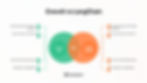
Let’s look at how these frameworks compare in today’s market.
Global Startup AI Framework & Multi-Agent Consultants
Consulting firms like Webkul, ElifTech, and TechMagic use both CrewAI and LangChain to deliver AI solutions for startups. Each framework’s ecosystem is supported by growing networks of service providers.
Specialized AI Framework & Multi-Agent Development Firms
Boutique firms such as Binary Studio and SevenCollab specialize in building custom CrewAI or LangChain solutions. Their expertise lies in tailoring agent orchestration for niche industries.
Technology-Focused AI Framework & Multi-Agent Providers
Some full-stack providers emphasise end-to-end development: from LLM selection to infrastructure scaling. These firms are ideal for startups that want a partner to handle both strategy and engineering.
AI Framework & Multi-Agent Integration Specialists
Finally, integration experts help companies connect CrewAI or LangChain with legacy systems and third-party services, ensuring smooth adoption without overhauling existing tech stacks.
Contact us today to discuss your project and discover how we can help bring your vision to life.
Final Recommendation: CrewAI vs LangChain for Startups
So which framework should you choose?
- LangChain is ideal if you need modular flexibility and want to build complex, composable pipelines for data, reasoning, and workflows. It’s a strong fit for tech-heavy startups with experienced engineering teams.
- CrewAI shines when you need role-based, collaborative AI systems that mimic team structures. If your workflows depend on agents coordinating as specialists, CrewAI provides a natural fit.
In practice, many startups experiment with both A/B testing frameworks on real use cases. The best choice often depends on whether your product requires structured modular chains (LangChain) or collaborative role-based teams (CrewAI).
Next step: If your team is exploring multi-agent AI, test both frameworks with a limited pilot project. Measure productivity, integration effort, and performance before scaling.