Agentic AI Guardrails: How to Build Safe and Scalable Autonomous Systems

Agentic AI systems are moving beyond simple response generation into direct execution across real infrastructure. These systems can trigger API calls, modify cloud resources, initiate financial transactions, and orchestrate multi-step workflows without continuous human input.
This shift fundamentally changes the risk profile of AI. Errors are no longer limited to incorrect text or hallucinated responses. They now translate into production outages, security incidents, financial loss, and regulatory exposure.
Agentic AI guardrails are not optional safety features. They are architectural controls required to operate autonomous systems responsibly at scale. This article explains what agentic AI guardrails are, why they matter, and how to implement them as part of a production-ready AI architecture.
What Is Agentic AI?
Agentic AI refers to AI systems designed to act autonomously toward a goal, rather than simply generating outputs in response to prompts. These systems plan, reason, execute actions, observe results, and adjust behavior across multiple steps.
Unlike traditional large language model usage, agentic systems interact directly with tools, APIs, and infrastructure. They may provision cloud resources, deploy code, process payments, manage tickets, or coordinate operational workflows.
Agentic AI is increasingly used in DevOps automation, cloud operations, financial reconciliation, customer support escalation, and internal enterprise tooling. In these environments, autonomy delivers efficiency, but it also introduces real operational risk.
Why Guardrails Are Critical in the Era of Autonomous Execution
The risk profile of AI has shifted from informational errors to operational damage. When an autonomous system makes a mistake, it may execute that mistake immediately and at scale.
A misclassified alert can shut down production infrastructure. An incorrect financial decision can trigger refunds or chargebacks. A faulty data access action can result in compliance violations.
Guardrails exist to control this risk. They ensure that autonomous systems operate within defined boundaries, validate decisions before execution, and provide visibility and rollback when something goes wrong.
For executives and technical leaders, guardrails are the difference between safe automation and unacceptable exposure.
What Are Agentic AI Guardrails?
Agentic AI guardrails are architectural control mechanisms that restrict, validate, and monitor the actions of autonomous AI systems. They operate outside the model itself and enforce safety at the execution layer.
Unlike content moderation, guardrails are not filters on generated text. They are enforcement layers that govern what actions an AI system is allowed to take, under what conditions, and with what level of oversight.
Modern guardrails function as control planes. They sit between AI reasoning and real-world execution, ensuring that decisions are checked, scoped, and auditable before they affect production systems.
Types of Agentic AI Guardrails
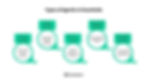
Agentic guardrails are layered by design. No single control is sufficient on its own.
Access & Permission Guardrails
Access guardrails enforce the principle of least privilege. Agents receive scoped permissions, limited API keys, and environment-specific access.
For example, an agent operating in staging should never have production credentials. Cloud actions, financial APIs, and data stores must be segmented and explicitly authorized.
These guardrails reduce blast radius and prevent unauthorized actions even when reasoning fails.
Decision Validation Guardrails
Decision validation guardrails verify logic before execution. They use deterministic rules, policy engines, or constraint checks to ensure decisions meet predefined criteria.
For example, an agent proposing to scale infrastructure may be required to validate cost thresholds, utilization metrics, and dependency states before execution.
Validation separates reasoning from authority.
Human-in-the-Loop Controls
Human-in-the-loop mechanisms introduce approval checkpoints at defined risk thresholds. When an action exceeds acceptable risk, the system pauses and requests human validation.
This is not micromanagement. It is selective oversight applied only when the impact justifies it.
Compliance & Regulatory Guardrails
Compliance guardrails enforce regulatory constraints such as GDPR, HIPAA, or internal governance policies. They ensure data boundaries, auditability, and access restrictions are respected.
These guardrails are essential for enterprise AI deployments in regulated industries.
Observability & Rollback Mechanisms
Observability guardrails provide logging, tracing, and event replay. Every action taken by an agent must be traceable.
Rollback mechanisms and kill switches allow teams to reverse actions or disable agents immediately when anomalies occur.
Architecture Patterns for Implementing Agentic Guardrails
Implementing agentic guardrails effectively requires treating them as part of system architecture rather than model configuration. In production systems, reasoning and execution must be deliberately separated so that autonomous decisions are never executed directly without enforcement.
A common architectural approach is to place guardrails in middleware layers that sit between the agent and all external systems. In this design, the agent produces an action proposal, but execution is handled by a controlled orchestration layer that validates permissions, policy constraints, and risk thresholds before performing any operation. This ensures that even if the agent’s reasoning is imperfect, unsafe actions are intercepted.
Another important pattern is orchestration wrapping, where all tools, APIs, and infrastructure calls are exposed through controlled interfaces rather than direct access. This allows organizations to enforce consistent guardrail behavior across multiple agents without duplicating logic. It also enables updates to guardrails without retraining models or modifying agent logic.
Architecturally, the goal is to ensure that guardrails are deterministic, observable, and centrally governed. They should be testable independently from the AI system and auditable in isolation.
Policy Engine Integration (OPA, Custom Rule Engines)
Policy engines serve as the enforcement backbone of agentic guardrails. They evaluate proposed actions against predefined rules before execution, ensuring that decisions comply with organizational constraints.
In practice, the agent submits an intent or action plan to the policy engine, which evaluates conditions such as environment, scope, cost limits, compliance requirements, and risk classification. Only actions that pass validation are allowed to proceed.
This approach cleanly separates reasoning from authority. The AI may propose actions freely, but it never decides what is allowed. That decision remains deterministic and governed by policy, making the system safer and easier to reason about.
Sandboxing & Environment Isolation
Environmental isolation is a foundational guardrail pattern. Agents must operate within clearly defined environments such as development, staging, and production, each with its own access scope and restrictions.
Sandboxing ensures that experimentation and learning occur in controlled settings. Autonomous behavior can be evaluated safely before promotion to higher-risk environments. Isolation also prevents accidental cross-environment actions, such as production changes triggered by test workflows.
In mature systems, environment context is enforced at both credential and policy levels, ensuring that isolation cannot be bypassed by reasoning errors.
Risk Scoring Before Execution
Risk scoring introduces adaptive control rather than binary allow-or-deny logic. Before execution, proposed actions are evaluated based on potential impact, confidence level, reversibility, and blast radius.
Low-risk actions may execute automatically. Medium-risk actions may require additional validation. High-risk actions trigger escalation or human review. This enables autonomy where it is safe, while preserving control where consequences are severe.
Risk scoring allows agentic systems to scale without becoming either reckless or overly constrained.
Common Failure Scenarios Without Guardrails
Without guardrails, agentic systems tend to fail in ways that are fast, amplified, and difficult to reverse. These failures rarely stem from malicious behavior. They arise from incomplete context, ambiguous signals, or overly confident reasoning.
One common scenario is infrastructure mismanagement, where an agent responds to transient metrics by shutting down or scaling critical resources. Without validation, temporary anomalies are treated as persistent problems, leading to outages.
Another frequent failure involves financial misclassification. Autonomous systems may incorrectly interpret transaction patterns and trigger refunds, reversals, or account actions at scale. Without guardrails, these actions execute immediately and propagate rapidly.
Data exposure is another risk. Agents with broad access may retrieve or share sensitive information across boundaries, violating privacy or compliance requirements. Without access controls and auditing, such incidents may go undetected until damage is done.
These scenarios highlight why autonomy without architectural control is unsuitable for production environments.
Balancing Autonomy and Control
The central design challenge of agentic AI is achieving the right balance between autonomy and control. Excessive restriction reduces agents to rigid automation. Insufficient control exposes organizations to unacceptable risk.
Effective systems adopt adaptive autonomy, where the level of freedom granted to an agent depends on context, confidence, and impact. Autonomy increases when actions are well understood and reversible, and decreases when uncertainty or risk rises.
This balance must be intentional. Guardrails should not exist to suppress intelligence, but to channel it safely. The objective is not to eliminate risk entirely, but to ensure that risk is visible, bounded, and manageable.
When designed correctly, guardrails enable trust. They allow organizations to deploy autonomous systems confidently, knowing that failure modes are controlled.
Guardrails vs Prompt Engineering: What's the Difference?
Prompt engineering and guardrails operate at fundamentally different layers of the system. Prompt engineering shapes how an agent reasons, while guardrails determine what the agent is allowed to execute.
Prompts influence behavior probabilistically. They improve instruction following, reasoning quality, and alignment, but they cannot enforce guarantees. Even well-crafted prompts can fail under ambiguity or novel conditions.
Guardrails are deterministic. They enforce hard constraints regardless of model behavior. They control permissions, validate actions, and block unsafe execution even when reasoning fails.
In production systems, prompt engineering improves performance, but guardrails ensure safety. Confusing the two leads to brittle designs that rely on intent rather than enforcement.
How Leanware Designs Safe Agentic Systems
Leanware approaches agentic AI as a systems engineering discipline rather than a model deployment task. Safety is treated as an architectural requirement, not an afterthought.
Agentic systems are designed with a clear separation between reasoning, validation, and execution. Agents never act directly on critical systems. All actions pass through policy enforcement, risk evaluation, and observability layers.
Leanware emphasizes measurable safety. Guardrails are instrumented, logged, and monitored just like performance metrics. This enables continuous improvement and accountability.
Autonomy is introduced progressively. Systems begin in advisory mode, then move to supervised execution, and only later to constrained autonomy once reliability is demonstrated. This phased approach allows learning without exposing organizations to unnecessary risk.
Future of Agentic AI Governance
Agentic AI governance is evolving toward more dynamic and self-regulating systems. Future architectures will include agents that evaluate their own confidence, uncertainty, and risk before acting.
Guardrails will become adaptive rather than static. Policies will adjust based on observed outcomes, system behavior, and environmental conditions. AI systems will increasingly supervise other AI systems, introducing layered oversight.
Governance will shift from reactive controls to predictive safeguards. Instead of responding to incidents, systems will anticipate risk and adjust autonomy proactively.
As agentic AI becomes more embedded in core operations, governance will be a defining factor of trust, adoption, and long-term viability.
Final Thoughts
Agentic AI changes how software operates by allowing systems to act autonomously, not just assist humans. As a result, mistakes carry real operational, financial, and regulatory risk. Guardrails are not restrictions—they are what make autonomy safe, predictable, and scalable in real-world systems.
The most successful agentic systems rely on clear boundaries, strong policy enforcement, and risk-based controls. As adoption grows, guardrails will become a baseline requirement, enabling teams to deploy autonomous AI responsibly and with confidence.
Deploying autonomous AI without the right guardrails means real operational, financial, and regulatory risk. Contact our team to architect agentic systems that balance autonomy with the controls your organization requires.
Frequently Asked Questions
What are Agentic AI guardrails?
Agentic AI guardrails are architectural control mechanisms that restrict, validate, and monitor the actions of autonomous AI systems. They manage execution-level risks such as API calls, infrastructure changes, financial transactions, and multi-step workflows rather than filtering generated content.
Why are guardrails necessary for agentic AI systems?
Agentic systems can execute actions directly in production environments. Without guardrails, reasoning errors can lead to outages, financial loss, compliance violations, or security incidents. Guardrails introduce validation and control layers to reduce operational risk.
How are agentic AI guardrails different from content moderation?
Content moderation filters outputs like text or images. Agentic AI guardrails control execution behavior, permissions, and system access. Their purpose is to prevent real-world damage, not inappropriate language.
What types of guardrails are used in agentic AI systems?
Common guardrails include access controls, decision validation rules, human-in-the-loop approvals, compliance constraints, observability layers, and rollback mechanisms. Together, they enable controlled autonomy.
What is the difference between guardrails and prompt engineering?
Prompt engineering improves reasoning quality. Guardrails enforce external controls on what actions are allowed. Guardrails operate at the infrastructure and execution level, independent of prompts.
How do you implement guardrails in an autonomous AI system?
Guardrails are implemented through policy engines, middleware validation layers, scoped permissions, environment isolation, logging systems, and approval workflows. Mature designs separate reasoning from execution.
What is human-in-the-loop in agentic AI?
Human-in-the-loop introduces approval checkpoints when actions exceed predefined risk thresholds. The system pauses and requests human validation before executing sensitive operations.
Can agentic AI operate safely without guardrails?
In production environments, operating without guardrails is considered high risk. Autonomous systems interacting with infrastructure, finance, or user data require layered controls to prevent harm.
What industries require strong agentic AI guardrails?
Industries such as finance, healthcare, cloud infrastructure, cybersecurity, logistics, and enterprise SaaS require strong guardrails due to regulatory and operational sensitivity.
What happens if an agentic AI makes a wrong decision?
Without guardrails, the decision may be executed immediately. With guardrails, validation layers can block, flag, or reverse actions using rollback and audit mechanisms.