AI Agent Development Services for Startups and Businesses That Need Results
Software is moving beyond simple input-and-response workflows. AI agents can handle multi-step tasks, use tools, and move work forward with much less manual involvement. That is why businesses are paying close attention to AI agent development services as a practical way to improve speed, scale, and operational efficiency.
What Are AI Agent Development Services?
AI agent development services focus on designing, building, and deploying AI software agents capable of completing tasks with varying degrees of autonomy. These agents differ from simple AI features because they do not just generate text or answer one-off prompts. They can reason through a goal, use tools, pull in data, and take action across multiple steps.
For non-technical teams, the easiest way to think about it is this: an AI agent is closer to a digital operator than a basic assistant. It does not just wait for commands and return output. It can follow a process, decide what to do next, and keep moving through a workflow until the job is done or it needs human input.
AI Agents vs. Traditional AI: Key Differences
Traditional AI tools are usually reactive and deterministic. You give them an input, and they return an answer. That can be useful, but it is often limited to one step at a time. AI agents work differently. They can take a broader goal, break it into smaller actions, use available tools, and adjust based on what happens during the process.
That difference matters in practice. A traditional AI tool might summarize a report. An AI agent might gather the data, compare it against prior results, identify changes, draft a summary, and send it to the right person. The shift is from single-response intelligence to task-oriented execution.
AI Agents vs. Chatbots vs. RPA: Where Do They Fit?
Chatbots, RPA tools, and AI agents can all automate work, but they are not the same thing. Chatbots are mainly built for conversation. RPA is usually built for repetitive, rule-based processes. AI agents are more flexible, can understand context, use language, work across systems, and handle more variation than rigid automation tools.
Core Components of an AI Agent
Most AI agents are built from a few core pieces. There is usually a reasoning engine, often powered by a large language model, that helps the agent interpret goals and decide what to do. There is memory, which helps it keep context across steps. There are tools and integrations that let it access systems, databases, or APIs. And there is a clear objective that guides what the agent is trying to accomplish.
Types of AI Agents We Build
There are many types of AI agents that fit different business problems and workflows.
Task Automation Agents
Task automation agents are built to handle repetitive workflows from start to finish with minimal manual involvement. These are often the first place companies see real value because so much day-to-day operational work is still repetitive, time-sensitive, and dependent on people manually moving information from one place to another.
A well-built automation agent can reduce that burden by handling the work continuously and more consistently. That might mean processing requests, updating systems, organizing records, or coordinating actions across several tools. The business value here is usually simple and immediate: less manual effort, faster turnaround, and fewer routine tasks sitting on people’s desks.
Decision-Support Agents
Decision-support agents are meant to help people make better calls, faster. Instead of replacing human judgment, they gather information, analyze patterns, and surface recommendations or next steps that a manager, analyst, or operator can review. These agents are especially useful when the amount of data is high and the time to act is short.
In practice, this can look like an agent that reviews customer behavior, flags risky trends, summarizes operational exceptions, or recommends actions based on multiple inputs. The real advantage is not just speed. It is the ability to bring together relevant information in a way that helps people act with more clarity.
Conversational and Customer-Facing Agents
Customer-facing agents are built to interact through natural language, usually through chat, support channels, internal portals, or product interfaces. They are often used to answer questions, guide users, resolve issues, or help people complete tasks without waiting for a human team to step in.
The best versions of these agents do more than just talk. They connect with systems, personalize responses, and actually help move the issue forward. That is what separates a useful conversational agent from a basic chatbot. It is not just about sounding natural. It is about being able to help.
Multi-Agent Systems
Some use cases are too complex for a single agent to handle well. In those cases, a multi-agent system can make more sense. This is where several specialized agents work together, usually with some kind of coordinating layer that routes tasks, shares context, or manages how the work is divided.
This approach is often useful in larger or more complicated environments where different types of reasoning and actions need to happen in parallel. One agent may gather information, another may evaluate it, and another may prepare the output or trigger a system action. When designed well, this structure can make complex workflows more manageable and scalable.
Autonomous Research and Monitoring Agents
Research and monitoring agents are built to watch, scan, and surface important information without someone having to ask every time. These are useful in situations where the business needs continuous awareness, such as compliance tracking, competitor monitoring, system alerts, market changes, or internal reporting.
This type of agent is valuable because it shifts work from reactive to proactive. Instead of waiting for someone to notice a change or check a dashboard, the system can keep watch on its own and raise useful signals when something matters. That makes it a strong fit for operations-heavy teams and decision-makers who need timely visibility.
Our AI Agent Development Services
AI Agent Strategy and Use Case Discovery
A lot of companies are interested in AI agents but do not yet know where they should start. That is normal. The first useful step is usually not development. It is figuring out which workflow actually deserves automation, where the operational friction is, and what a successful first use case would look like.
This strategy phase matters because not every task is a good fit for an agent. The right starting point is usually a process that is repetitive, valuable, and clear enough to measure. Getting this part right helps avoid wasted effort and makes the rest of the roadmap much more grounded.
Custom AI Agent Design and Architecture
Once the use case is clear, the next step is designing an agent that actually fits the business context. That means choosing the right model setup, deciding what tools the agent should use, figuring out where memory is needed, and shaping the workflow around how the business already operates.
This is where custom development matters. Generic agent setups often break down when they hit real systems, messy workflows, or internal constraints. Good architecture makes the agent more reliable, easier to maintain, and better aligned with the actual problem it is supposed to solve.
Multi-Agent System Development
When one agent is not enough, a multi-agent system can be designed to split the work across specialized roles. This is useful when the workflow includes different kinds of tasks, such as research, analysis, planning, execution, and quality control, all inside the same larger process.
Building these systems takes more than just creating multiple agents. The coordination logic matters a lot. The agents need clear responsibilities, a reliable way to share context, and safeguards so the system stays understandable instead of becoming chaotic. Done well, though, this approach can handle far more sophisticated use cases.
Integration with Existing Systems and APIs
Most businesses do not want to rebuild their stack just to use AI agents, and they should not have to. A practical AI agent setup should connect with the tools the company already uses, whether that means internal software, CRMs, ERPs, support systems, databases, or third-party APIs.
This is one of the most important parts of making an agent actually useful. Without integration, the agent stays stuck as a demo. Once it can read data, trigger workflows, update systems, and work inside existing infrastructure, it starts becoming part of real operations.
Testing, Evaluation, and Iteration
AI agents should never go straight from idea to production without proper evaluation. Unlike traditional software, their behavior often needs to be tested with real-world data, real edge cases, and actual workflow conditions. That is how teams learn where the system performs well and where it still needs refinement.
This is usually an iterative process. Agents improve when they are measured, reviewed, and adjusted over time. The strongest teams do not assume the first version is final. They use testing and benchmarks to improve reliability before and after launch.
Maintenance, Monitoring, and Ongoing Support
Deployment is not the end of the work. Once an AI agent is live, it needs to be monitored, updated, and occasionally reworked as business processes, data patterns, or model behaviour changes. That is especially true for agents that are connected to important workflows or customer-facing systems.
This is why long-term support matters. A strong partner does not disappear after launch. They stay involved enough to track performance, handle issues, improve outputs, and keep the system aligned with how the business is evolving.
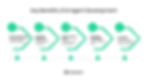
Key Benefits of AI Agent Development
Increased Productivity and Operational Efficiency
One of the clearest benefits is productivity. A well-designed agent can handle repetitive work far faster than a manual process and can keep doing it around the clock. That frees internal teams to focus on exceptions, strategic work, or tasks that genuinely need human judgment.
The productivity gain is not only about speed. It is also about consistency. Agents do not get distracted, forget steps, or create slowdowns because work is sitting in a queue waiting for someone to pick it up. For many teams, that alone can remove a surprising amount of friction.
Scalability Without Increasing Headcount
As businesses grow, the usual answer to a rising workload is to hire more people. Sometimes that is necessary, but it is also expensive and slow. AI agents give companies another path by helping them absorb more complexity and volume without scaling headcount at the same pace.
That can be especially useful for startups and lean product teams. If the business is growing quickly, agents can help support that growth without forcing the company to immediately expand every operational function. Over time, that can make the whole system more efficient and easier to scale.
Enhanced Decision-Making and Accuracy
Some workflows do not need full automation. They need better analysis, faster visibility, and more accurate recommendations. This is where AI agents can improve decision-making by pulling together information from multiple sources and surfacing what matters in real time.
The benefit is not that the agent magically becomes the decision-maker. It is that people spend less time gathering context and more time responding to it. In many environments, that alone can lead to faster and more consistent decisions.
Improved Customer and Employee Experience
Agents can improve both customer-facing and internal experiences when they reduce delay, confusion, and repetitive manual work. Customers benefit from faster responses and more available support. Employees benefit from fewer repetitive tasks and easier access to the information they need to do their jobs.
That balance matters. Too much AI discussion focuses only on external automation. In reality, a lot of the strongest value shows up internally when teams stop losing time to low-value process work and can operate with less friction.
Faster Time-to-Value Compared to Traditional Development
Traditional software projects often take a long time before the business sees clear value. AI agent development can sometimes shorten that timeline because teams can start with a focused pilot, test it quickly, and improve it based on actual usage rather than waiting for a large all-at-once rollout.
That faster feedback loop is a big advantage. It lets companies validate the use case early, see whether the workflow is worth expanding, and move into production with more confidence. In practical terms, it means less waiting before the business learns whether the investment is paying off.
Industry Use Cases and Applications
AI agents are useful across many industries because the underlying needs are often similar. Businesses want to reduce manual work, improve response speed, handle growing complexity, and make better use of data. The details change from one sector to another, but the general pattern is the same.
That said, strong agent development should never feel generic. The value comes from tailoring the system to the industry, the workflow, and the level of oversight the environment requires. What works in a support team may not be enough for a finance or healthcare setting.
Customer Service and Support Automation
Support is one of the clearest use cases because it combines high volume, repetitive questions, and the need for quick responses. AI agents can help answer common queries, route issues, pull account information, and support resolution workflows without needing a human to handle every first step.
This can reduce support workload significantly while also improving response time for customers. The best setups do not just deflect tickets. They actually help move the issue forward and know when to escalate to a person when the situation calls for it.
Sales, Marketing, and Lead Management
Sales and marketing teams often deal with a lot of repetitive work that still needs contextual judgement. That makes them a good fit for agents who can qualify inbound leads, personalize follow-up, organize pipeline information, or support campaign workflows with less manual coordination. Used well, this can help teams move faster without making the process feel robotic.
Operations, Finance, and Internal Workflows
Operations-heavy teams are often full of tasks that are structured, repetitive, and time-sensitive. Finance, logistics, HR, and compliance teams all deal with processes where data moves across systems and where delays or mistakes create real friction. AI agents can help by automating the repetitive parts while keeping people involved where judgment is needed.
Software Development and Engineering
Engineering teams are also starting to use agents more directly. That can include help with code generation, testing, CI/CD support, incident review, documentation, or internal development workflows. In these cases, the agent is not replacing developers.
It is helping them move through work faster and with more context. This area is growing because engineering work already sits close to tools, APIs, and structured workflows.
Healthcare, Legal, and Professional Services
In regulated or document-heavy fields, agents can support work such as document analysis, scheduling, case research, compliance support, and administrative coordination. These industries tend to need strong oversight, so the agent usually works as a support layer rather than a fully autonomous decision-maker.
Our Development Process
Discovery: Defining Use Cases and Success Metrics
The first step is understanding the business problem clearly. That means identifying where the friction is, what the agent should improve, and how success will be measured. This phase keeps the project grounded in business value instead of vague AI ambition.
Prototyping and Proof of Concept
Once the use case is defined, the next step is a pilot or proof of concept built with realistic conditions. This helps validate whether the workflow is a good fit before full-scale development begins. That matters because some ideas look strong in theory but break down when exposed to real data and messy business conditions.
Development and Integration
After validation, the team builds the agent logic, memory structure, tool usage, and integrations needed for production. This phase should be transparent and collaborative so the client understands how the system is taking shape. That visibility reduces surprises and helps the final solution fit the business more naturally.
Production Deployment and Optimization
Production deployment means more than turning the system on. It includes monitoring, security alignment, reliability checks, and learning from real usage. Optimization continues after launch. That is part of how the system matures rather than a sign that something went wrong.
Technology Stack and Tools We Use
The stack matters, but not because clients need a technical shopping list. What matters is using the right tools for the use case, balancing capability, cost, speed, privacy, and maintainability. Good technical choices should make the system more reliable and easier to scale over time.
LLM Providers and Model Selection
LLM model selection should be driven by the business need, not by hype. Different models perform differently on reasoning quality, latency, cost, privacy, and tool use. A strong team chooses based on fit. The best model for a research workflow may not be the best one for a support agent or internal automation system.
Agentic Frameworks and Orchestration Tools
Frameworks and orchestration tools help structure how agents reason, use tools, and pass context across steps. Once a workflow becomes more than a single prompt, that structure becomes important. The right framework makes the system easier to maintain and scale without overcomplicating the architecture.
Memory, Knowledge Bases, and RAG Architecture
Many AI agents need access to context beyond the immediate prompt. Memory systems, retrieval-augmented generation, and knowledge bases help them pull in relevant information from business data and internal documents.
This is often what makes an agent useful in real business settings rather than just impressive in a demo.
Security, Governance, and Responsible AI
For enterprise buyers and large product teams, security and governance are just as important as capability. Agents can only create value if they are safe, auditable, and aligned with business rules. That means responsible AI design should be part of the system from the start.
Human Oversight and Decision Control
Even highly capable agents should not make every decision. Sensitive workflows need escalation paths, review points, and clear boundaries around what the system can do independently. That is not a weakness. It is usually a sign that the system was designed with business reality in mind.
Data Privacy and Enterprise-Grade Security
Any agent touching business systems needs careful treatment around data access, model usage, authentication, and system integration. This becomes even more important when regulated or sensitive data is involved. Security should be part of the architecture, not an afterthought.
Avoiding Bias and Ensuring Transparency
Bias and lack of transparency are real concerns in AI systems, especially when outputs influence recommendations or decisions. Teams need ways to test behavior, review outputs, and keep the workflow explainable enough to trust. That does not mean perfect explainability in every case. It means responsible design and clear enough visibility to review what the system is doing.
How to Get Started with AI Agent Development
Start Small: Identifying Your First High-Impact Use Case
The best first use case is usually something repetitive, valuable, and easy enough to measure. It should be painful enough that solving it matters, but not so complex that the first pilot becomes hard to validate. In many cases, a narrow internal workflow is a better starting point than a highly visible customer-facing rollout.
This helps the company learn quickly without creating unnecessary risk. Once the team sees what works, it is much easier to expand into more ambitious workflows from a stronger base.
Build vs. Buy: When Custom Development Makes Sense
Off-the-shelf tools can be a good fit when the workflow is common and the company does not need much customization. But once the process is tightly connected to internal systems, unique rules, deeper integrations, or security requirements, custom development usually becomes the better choice.
The tradeoff is not only about features. It is also about control, long-term flexibility, and whether the agent actually fits the business. Generic tools can be useful, but they often fall short when the workflow matters enough to become part of core operations.
Why Choose Our AI Agent Development Team
There are a lot of teams now offering some version of AI services, but not all of them approach agent development with the same level of engineering discipline. The difference usually shows up once the project moves beyond a prototype and needs to connect with real systems, real users, and real business constraints.
That is why the most important differentiator is usually not access to models. It is the ability to build solutions that fit the client’s workflow, hold up in production, and keep improving over time. That takes technical depth, product thinking, and a collaborative way of working.
Technical Expertise and Proven Delivery
A capable AI agent team should understand more than prompting. They should know how to design workflows, manage tool use, structure memory, evaluate outputs, and deploy systems that can be trusted in production. That is what turns a promising idea into something operationally useful.
Custom Solutions Over One-Size-Fits-All Platforms
Pre-built platforms can be useful for standard use cases, but they often become limiting once the workflow gets specific. Businesses usually have their own systems, data structures, rules, security expectations, and edge cases. That is where custom development starts to matter.
A custom-built solution does not mean building everything from scratch unnecessarily. It means shaping the agent around the actual business process instead of forcing the process to bend around a generic tool.
A Collaborative Partner, Not Just a Vendor
The strongest AI projects usually feel collaborative rather than transactional. The team building the system should not just take requirements and disappear into delivery mode. They should work with the client to define goals, refine the use case, and stay involved as the system improves.
That kind of partnership matters more in AI than in many other areas of software because the work is still evolving quickly. A good partner helps the client learn, adapt, and make better decisions as the project moves forward.
Final Thoughts
AI agents are becoming a practical tool for companies that want more than isolated automation or one-off AI features. When designed well, they can take on meaningful work across operations, customer interactions, internal systems, and decision support. The real value is not in the label. It is in building systems that reduce friction, improve speed, and help teams operate at a higher level.
If you're exploring how AI agents can fit into your business, the next step is execution. Contact Leanware to discuss your use case, evaluate opportunities, and start building solutions that deliver real impact.
Frequently Asked Questions
What are AI agent development services?
AI agent development services help businesses design and build AI systems that can handle multi-step tasks, use tools, make decisions within defined boundaries, and work toward specific goals. These services usually include strategy, architecture, integration, testing, deployment, and ongoing improvement.
How are AI agents different from chatbots?
Chatbots are mainly designed for conversation, while AI agents are built to do work. An agent can still communicate through chat, but it can also reason through tasks, connect to systems, retrieve data, and take action across a workflow instead of only answering questions.
What kind of ROI can businesses expect from AI agents?
ROI depends on the use case, but it usually shows up through saved time, reduced manual effort, faster response speed, and the ability to scale operations without adding the same level of overhead. The clearest returns often come from repetitive, high-volume workflows where people are spending a lot of time on coordination or process work.
Are AI agents secure enough for business use?
They can be, as long as they are designed and deployed carefully. Security depends on factors such as access control, data handling, model usage, logging, human oversight, and how the agent connects to existing systems. A serious implementation should treat security as part of the architecture from the beginning.
How should a company get started with AI agent development?
The best starting point is usually a focused pilot around one high-impact workflow. Instead of trying to automate everything at once, the company should choose a process that is valuable, repetitive, and measurable. That makes it easier to prove value early and expand from there with more confidence.