Healthcare Software Development Services & Solutions

Healthcare runs on software that often lags a decade behind other industries. Many hospitals still use systems built before smartphones existed, patient records sit in silos that cannot talk to each other, and administrative tasks consume hours that should go toward patient care. Patients, meanwhile, expect the same convenience from healthcare that they experience in banking or retail.
Healthcare software development focuses on creating systems that support clinical workflows, handle medical data securely, and meet regulatory requirements. These systems include everything from electronic records and telemedicine platforms to patient engagement tools and analytics solutions.
Let’s look at the key software solutions, industry applications, compliance requirements, and practical considerations for healthcare technology projects.
What Is Healthcare Software Development?
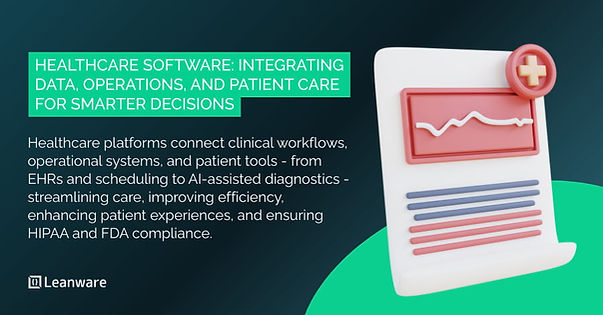
Healthcare software development is the process of designing, building, and maintaining digital platforms for medical and health-related applications. These systems support clinical workflows (EHR systems, diagnostic tools), operational functions (scheduling, billing, inventory), and patient-facing experiences (portals, mobile apps, telehealth).
The scope ranges from simple appointment booking apps to complex clinical decision support systems with AI-powered diagnostics. What distinguishes healthcare software from general application development is the regulatory environment: HIPAA compliance, FDA oversight for certain software categories, and the high stakes of handling protected health information (PHI).
Healthcare Software Development Market Overview
The digital health market is growing quickly. According to Grand View Research, the global digital health market reached $288.55 billion in 2024 and is projected to grow at a CAGR of 22.2% through 2030. The U.S. market alone was valued at $79.14 billion in 2024.
Several factors are driving this growth. Aging populations require more care management, chronic diseases are becoming more common, and the shift to telehealth after the pandemic has continued. In 2025, U.S. digital health startups raised $14.2 billion in venture funding, with Q4 alone bringing in $4.2 billion across 129 deals - the highest quarterly total to date - showing sustained investor interest in the sector.
Key Healthcare Software Solutions
Healthcare organizations deploy various software systems depending on their size, specialty, and patient population. Here is an overview of the most common solution types.
EMR/EHR Systems
Electronic Medical Records (EMR) and Electronic Health Records (EHR) form the foundation of clinical documentation. EMRs generally stay within a single practice, while EHRs are designed to be shared across providers and health systems.
Modern EHR systems support clinical documentation, order entry, e-prescribing, and care coordination. Interoperability efforts, including adoption of FHIR (Fast Healthcare Interoperability Resources) standards, aim to make data exchange smoother, though many systems still face challenges. Adoption is widespread: the 2024 NEHRS found that 95.0% of U.S. office-based physicians use EHR systems, with 83.6% using a certified EHR.
Healthcare Mobile Apps
Mobile health apps range from simple wellness trackers to sophisticated remote monitoring tools. Categories include symptom checkers, medication reminders, fitness tracking, mental health support, and chronic disease management.
Successful healthcare apps prioritize accessibility, intuitive UX, and robust security. Apps handling PHI must implement HIPAA-compliant data handling, which adds complexity compared to consumer apps.
Healthcare CRM Platforms
Healthcare CRMs manage patient relationships beyond clinical encounters. They support marketing automation, appointment reminders, satisfaction surveys, and retention campaigns. These systems help practices stay connected with patients between visits and identify opportunities for preventive care outreach.
Patient Engagement Tools
Patient engagement platforms include appointment scheduling, pre-visit questionnaires, educational content delivery, and communication tools. Effective engagement reduces no-show rates, improves treatment adherence, and increases patient satisfaction. Personalization based on condition, demographics, and preferences improves outcomes.
Hospital Management Software
Hospital management systems handle administrative functions: scheduling, bed management, billing, inventory tracking, and staff coordination. These platforms improve operational efficiency by automating manual processes and providing visibility into resource utilization.
Medical Device Software & SaMD
Software as a Medical Device (SaMD) performs medical functions without being part of a hardware device. Examples include diagnostic algorithms, treatment planning tools, and clinical decision support systems.
SaMD falls under FDA regulation and must follow IEC 62304 development standards. The regulatory pathway depends on the software's risk classification and intended use.
Pharmacy Management Solutions
Pharmacy systems manage inventory, prescription processing, e-prescribing integration, and controlled substance tracking. They ensure regulatory compliance and reduce medication errors through automated checks and alerts.
Healthcare eCommerce Platforms
Direct-to-consumer health platforms sell supplements, medical supplies, and telehealth services. These systems require secure payment processing, proper handling of health-related claims, and logistics for medical product delivery.
Patient Portals
Patient portals provide secure access to health records, lab results, appointment scheduling, and provider messaging. Integration with EHR systems ensures patients see current information. Portals support patient autonomy and reduce administrative burden on staff.
Telehealth & Telemedicine Solutions
Telehealth platforms enable remote consultations through video, audio, or asynchronous messaging. Features include virtual waiting rooms, e-prescribing, EHR integration, and payment processing. The telemedicine market is projected to reach $380 billion by 2030.
Healthcare Data Analytics Tools
Analytics platforms aggregate clinical, operational, and financial data to identify patterns and support decision-making. Applications include population health management, risk stratification, and quality measure tracking.
Business Intelligence for Healthcare
BI tools provide dashboards and reports for strategic decisions: revenue cycle performance, staffing optimization, capacity planning, and clinical quality metrics.
Remote Patient Monitoring (RPM) Solutions
RPM systems collect data from wearables and home devices to track patients between visits. Applications include chronic disease management, post-discharge monitoring, and early warning systems for deteriorating conditions.
Laboratory Information Management Systems
LIMS track samples, automate workflows, and ensure quality control in clinical and research laboratories. They support compliance with CLIA regulations and integrate with EHR systems for result delivery.
Healthcare Software Development Services by Industry
Software needs differ across healthcare sectors, from hospitals to consumer health apps. Each industry has unique workflows, compliance requirements, and integration needs that shape platform design and functionality.
Industry | Key Needs | Focus |
Hospitals & Providers | Enterprise platforms | High-volume workflows, interoperability |
Healthtech Startups | MVPs & scaling | Rapid validation, compliance support |
Medical Device Manufacturers | Embedded software | Firmware, regulatory validation |
Pharma & Life Sciences | R&D systems | Clinical trials, lab ops, audit trails |
CROs | Trial management | EDC, multi-site coordination |
Veterinary & Animal Health | Practice management | Medical records, client communication |
Health Insurance & Payers | Claims & member systems | Fraud detection, provider integration |
Fitness & Consumer Health | Engagement apps | UX, gamification, performance |
For Healthcare Providers & Hospitals
Large health systems need enterprise-grade platforms that handle high transaction volumes, complex workflows, and extensive integration requirements. Interoperability across departments and external partners is critical.
For Healthtech Startups
Startups typically need MVPs that can demonstrate value quickly while meeting compliance requirements. Scalability matters for growth, and regulatory coaching helps navigate FDA and HIPAA requirements early.
For Medical Device Manufacturers
Device companies building software components need expertise in firmware development, embedded systems, and regulatory validation. ISO 13485 compliance and design history documentation are essential.
For Pharma, Biotech & Life Sciences
Life sciences organizations need systems for clinical trial management, laboratory operations, regulatory submissions, and pharmacovigilance. These applications require extensive validation and audit trail capabilities.
For Contract Research Organizations (CROs)
CROs need electronic data capture (EDC) systems, site management tools, and trial tracking platforms that support multi-site studies and regulatory inspections.
For Veterinary Clinics & Animal Health
Veterinary software includes practice management, medical records, and client communication tools adapted for animal health workflows and species-specific requirements.
For Health Insurance & Payer Systems
Payers need claims processing, member management, fraud detection, and actuarial tools. Integration with provider systems and regulatory reporting are key requirements.
For Fitness, Wellness & Consumer Health
Consumer health apps focus on engagement, gamification, and user experience. While regulatory requirements may be lighter, competition demands polished design and reliable performance.
Benefits of Outsourcing Healthcare Software Development
Many organizations outsource healthcare development for practical reasons:
- Access to specialized expertise: Healthcare development requires understanding of clinical workflows, regulatory requirements, and security standards that general developers may lack.
- Cost efficiency: Development teams in Latin America or Eastern Europe offer competitive rates while maintaining quality.
- Faster time to market: Experienced teams can accelerate development by avoiding common pitfalls.
- Regulatory knowledge: Partners with healthcare experience understand HIPAA, FDA, and international compliance requirements
- Scalability: External teams can scale up or down based on project needs.
Nearshore partners offer time zone alignment and cultural compatibility for North American organizations.
Costs & Timelines for Healthcare Software Projects
Healthcare software costs vary significantly based on complexity, compliance requirements, and feature scope.
Project Type | Cost Range | Timeline |
Simple wellness app (MVP) | $40K - $80K | 3-4 months |
Telemedicine platform | $80K - $300K | 4-8 months |
Patient portal with EHR integration | $100K - $250K | 5-9 months |
Enterprise hospital system | $250K - $500K+ | 9-18 months |
Key cost drivers include:
- Number and complexity of features
- Integration requirements (EHR, payment, devices)
- Compliance scope (HIPAA, FDA, international)
- Platform choices (iOS, Android, web)
- UI/UX design complexity
Annual maintenance typically runs 15-20% of initial development costs, covering updates, security patches, and compliance monitoring.
Regulatory Compliance & Security in Healthcare Software
Building compliant software from the start is far cheaper than retrofitting security and compliance later.
HIPAA & Data Protection Standards
HIPAA compliance requires:
- End-to-end encryption (TLS 1.2+ in transit, AES-256 at rest)
- Role-based access controls
- Comprehensive audit trails
- Secure APIs with authentication
- Business Associate Agreements with vendors
- Regular risk assessments and security audits
The average cost of a healthcare data breach reached $7.42 million in 2025, making security investment worthwhile.
Medical Device Software Regulations
Software that qualifies as SaMD falls under FDA oversight. Requirements include:
- Risk classification (Class I, II, or III)
- IEC 62304 compliant development processes
- Design history file documentation
- Verification and validation testing
- Post-market surveillance for higher-risk devices
How to Choose a Healthcare Software Development Partner
Selecting the right partner requires evaluating both technical capabilities and healthcare domain expertise:
- Healthcare project experience: Look for demonstrated work in your specific area.
- Compliance knowledge: Verify understanding of HIPAA, FDA, and relevant standards.
- Transparent communication: Clear processes for requirements, progress, and issue resolution.
- Technical capabilities: Appropriate expertise in your target platforms and technologies.
- Client references: Speak with previous healthcare clients about their experience.
- Cultural fit: Working style alignment matters for long-term collaboration.
Trends in Healthcare Software Development
In 2026, healthcare software is being shaped by a few notable trends:
- AI-powered diagnostics: Machine learning is being used for image analysis, risk prediction, and clinical decision support. The FDA has approved over 1,200 AI/ML-based medical devices.
- LLMs for clinical documentation: Large language models are helping generate and summarize clinical notes.
- Wearable integration: Consumer devices are connecting more closely with clinical systems.
- Interoperability via FHIR: Standards like FHIR are making it easier for different systems to exchange data.
- Cybersecurity focus: Zero-trust architectures and stronger security controls are becoming standard.
- Digital therapeutics: Software is being used as a treatment tool for conditions such as diabetes, mental health, and substance use.
Getting Strated
Healthcare software development requires balancing clinical utility, regulatory compliance, security, and user experience. The market continues growing as healthcare organizations digitize operations and patients expect better digital experiences.
Success requires partners who understand both the technical challenges and the healthcare domain, including compliance requirements that can make or break a project.
You can also connect with our experts to discuss software solutions, system integrations, or modernization strategies to improve care delivery, streamline operations, and meet healthcare compliance requirements.
Frequently Asked Questions
What is healthcare software development?
Healthcare software development refers to designing, building, and maintaining digital solutions for the medical industry. These include EHR systems, telemedicine platforms, medical device software, patient engagement tools, and clinical analytics, built to improve care delivery, data management, and operational efficiency.
How much does it cost to develop a healthcare app?
Healthcare app development typically costs $50,000 to $500,000 depending on complexity, features, compliance requirements, and team location. Simple wellness apps start around $40,000, while HIPAA-compliant platforms with AI features and extensive integrations can exceed $300,000.
What types of software are used in hospitals?
Hospitals use EHR/EMR systems, hospital management software, patient portals, billing and revenue cycle management tools, medical imaging systems, pharmacy management software, and clinical decision support systems. These systems streamline workflows, improve patient care, and ensure regulatory compliance.
What regulations must healthcare software comply with?
Healthcare software must comply with HIPAA (U.S. patient data privacy), GDPR (EU data protection), and FDA or EMA guidelines for medical device software. Relevant standards include ISO 13485 for quality management and IEC 62304 for software lifecycle processes.
Why outsource healthcare software development?
Outsourcing provides access to specialized healthcare expertise, reduces development costs, accelerates time to market, and allows internal teams to focus on core operations. Partners with regulatory experience help navigate HIPAA and FDA requirements efficiently.
What are current trends in healthcare software development in 2026?
Key trends include AI-powered diagnostics and virtual assistants, remote patient monitoring expansion, telehealth integration with wearables, FHIR-based interoperability, zero-trust cybersecurity architectures, and LLMs for clinical documentation and decision support.
How do I choose the right healthcare software development partner?
Look for proven healthcare project experience, strong compliance knowledge (HIPAA, FDA), transparent communication and pricing, agile development processes, and verifiable client references. The right partner acts as a long-term collaborator who understands both technical and regulatory requirements.