Hire Nearshore Twilio SMS Integration Developer

A Twilio SMS Integration Developer ensures your messaging workflows run reliably. This includes handling delivery callbacks, retries, carrier-specific behaviors, and compliance rules to make sure messages reach their destinations without failure. Without this expertise, automated alerts, notifications, or multi-region campaigns can break or behave unpredictably.
Nearshore developers in Latin America bring this expertise while working in overlapping U.S. time zones. You can debug flows, adjust configurations, and validate delivery in real time, avoiding the delays and back-and-forth that often slow down offshore teams.
Let’s take a closer look at what Twilio can do and how nearshore developers handle each integration.
Twilio SMS & Communication Solutions
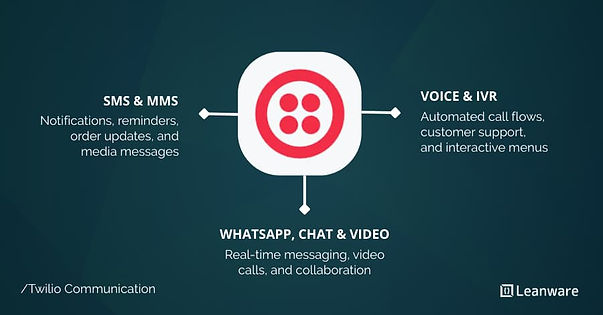
Twilio provides APIs for SMS, MMS, voice, video, and authentication. Most businesses start with SMS integration and expand to other channels as their needs grow.
A developer experienced with Twilio knows how to structure your implementation for future expansion without requiring a complete rebuild.
Twilio SMS Integration
When someone sends a text message to your Twilio number, Twilio triggers a webhook to a specified URL, delivering key information such as the sender's number, message content, and any media attached. Your developer configures these webhooks to connect with your backend systems, CRM, or application database.
The integration involves setting up phone numbers, configuring messaging services, and handling inbound and outbound messages. You'll also need error handling for failed deliveries, retry logic for rate limits, and logging for compliance audits. A Twilio developer builds these components, so your system reliably sends and receives messages at scale.
SMS & MMS Application Development
Custom SMS applications handle use cases like appointment reminders, order status updates, and customer service. MMS adds the ability to send images, which matters for businesses sending receipts, product photos, or visual instructions.
The complexity comes from managing conversation state, handling user responses, and routing messages to the right internal systems. Your developer needs to design workflows that account for user opt-outs, invalid inputs, and peak traffic periods where message volume spikes.
Voice Call & IVR Application Development
Interactive Voice Response systems let customers navigate menus using their phone keypad or voice commands. Twilio supports building conversational messaging on multiple channels including web chat, WhatsApp, and SMS. IVR applications require writing TwiML (Twilio Markup Language) to define call flows, recording prompts, and handling user inputs.
Common IVR use cases include appointment scheduling, payment collection, and customer support routing. The technical challenge is building flows that feel natural while handling edge cases like invalid inputs or dropped connections.
Twilio WhatsApp Business Integration
WhatsApp reaches 2.7 billion monthly active users globally. With 2.7 billion monthly active users, WhatsApp is the most popular messaging app in more than 180 countries that allows you to create engaging customer interactions with rich content. Businesses use it for customer engagement, order confirmations, and support conversations.
Integrating WhatsApp through Twilio requires approval from Meta and compliance with their business messaging policies. Your developer handles the approval process, implements message templates, and builds the webhook infrastructure to receive and respond to messages. WhatsApp supports rich media, so your integration can send images, documents, and location data.
Twilio Chat & Video Integration
Real-time chat and video features power telehealth platforms, remote onboarding, and internal collaboration tools. Twilio's Programmable Video API handles the WebRTC complexity, but your developer still needs to build the room management, participant controls, and recording functionality.
Chat implementations require managing conversation history, presence indicators, and typing notifications. Video adds complexity with network quality handling, screen sharing, and recording storage. These features require careful planning around bandwidth limitations and fallback options for poor connections.
Two-Factor Authentication with Twilio Verify
Twilio Verify handles SMS-based 2FA without you needing to build the verification logic from scratch. The API generates codes, sends them via SMS or voice, and validates user inputs. Verify's Protection Suite safeguards the ecosystem from bad actors while offering a portfolio of tools, saving businesses over $46M with Verify alone.
Security-focused applications like fintech platforms and SaaS products use Verify to protect account access. Your developer integrates Verify into your authentication flow, handles failed verification attempts, and implements rate limiting to prevent abuse.
Twilio Automation & Workflow Solutions
Automated workflows reduce manual work by triggering messages based on events in your system. Appointment reminders send automatically 24 hours before scheduled times. Payment alerts go out when transactions complete. Delivery notifications update customers as orders move through fulfillment.
Building these workflows requires connecting Twilio to your database or event system. Your developer writes the logic that determines when to send messages, what content to include, and how to handle failures. Proper workflow design prevents duplicate messages and ensures critical notifications reach users reliably.
How The Nearshore Hiring Process Works
Hiring nearshore developers follows a structured process that reduces time-to-hire while maintaining quality standards. Most companies find qualified candidates within 2-3 weeks.
1. Provide Your Requirements
Start by documenting what you need. List the Twilio features you want to integrate, your existing tech stack, and any compliance requirements specific to your industry or region. Be specific about whether you need SMS only or plan to expand to voice, video, or WhatsApp later.
Include your project timeline and whether you need full-time developers or part-time support. Nearshore providers match developers based on these requirements, so clarity upfront speeds the process.
2. Hire Top Talent Fast
Nearshore providers pre-vet developers through technical assessments and code reviews. This screening filters candidates by experience level and specific technology expertise. You interview shortlisted candidates and review their portfolios before making a decision.
The vetting process typically takes 1-2 weeks from initial requirements to candidate presentation. Once you select a developer, onboarding starts immediately. Most nearshore developers can begin within 1-2 weeks, compared to 4-8 weeks for traditional hiring.
3. Collaborate Easily with Developers
Nearshore developers work during hours that overlap with your team. A developer in Mexico City is in the Central time zone. Someone in Buenos Aires is only 1-3 hours ahead of Eastern time, depending on daylight saving. This overlap means you can schedule daily standups, hold planning meetings, and resolve urgent issues in real time.
Communication happens through the same tools your team already uses. Slack for async updates, Zoom for meetings, and GitHub for code reviews. The cultural similarity between North and Latin America reduces miscommunication compared to offshore alternatives where indirect communication styles can cause misunderstandings.
4. Simplified Payment & Support
Nearshore providers handle payroll, benefits, and administrative overhead. You pay a fixed monthly rate per developer, which includes their salary, benefits, and the provider's management fee. This model is simpler than managing international contractors directly and avoids currency conversion issues.
Support typically includes a dedicated account manager who handles scheduling, escalations, and any personnel issues. If a developer isn't working out, the provider can replace them without gaps in your project timeline.
Why Hire a Nearshore Twilio Expert?
Nearshore hiring combines cost savings with practical collaboration advantages. The model works particularly well for technical projects like Twilio integration where real-time communication speeds development.
Faster Communication & Time Zone Advantage
Real-time collaboration matters for development projects. When a bug appears in production, you need your developer available to investigate immediately, not 12 hours later. When requirements change, you discuss them in a quick call rather than waiting for async messages to cross time zones.
Nearshore teams complete projects 20-30% faster than offshore teams due to improved communication. The time zone overlap eliminates the delays that happen when questions sit unanswered overnight.
Cost-Effective Quality Development
Nearshore Twilio developers in LATAM typically charge $30–60 per hour depending on experience and project complexity. Compare that with U.S.-based developers, who charge $100–200 per hour for similar work.
- You can hire senior-level talent at a cost closer to mid-level U.S. rates.
- This approach delivers better quality work without inflating your budget.
Proven Expertise in Twilio APIs
Experienced Twilio developers know how to handle:
- A2P 10DLC registration for U.S. messaging.
- Message routing and rate limits during traffic spikes.
- Webhook debugging and error logging to avoid silent failures.
They understand nuances that can break implementations - like the difference between short codes, long codes, and toll-free numbers and can design systems to avoid rebuilds due to deliverability issues.
Look for developers with Twilio Certified Developer credentials or documented project experience. GitHub repositories showing Twilio integration work provide concrete evidence of their capabilities.
Twilio Use Cases Across Industries
Twilio's platform is utilized across various industries to manage digital communications, security, and customer data. Its primary use cases focus on personalizing customer engagement through AI-integrated messaging, voice, and email.
Core Business Use Cases
These are the main ways Twilio is applied in business operations today:
- Alerts and Notifications: Automate reminders, shipping updates, or service alerts.
- Marketing and Promotions: Run bulk SMS, WhatsApp, or email campaigns with personalized offers or win-back messages.
- Customer Support and Sales: Use Twilio Flex for omnichannel support with voice, chat, or video. AI agents handle basic queries around the clock.
- Verification and Security: Send OTPs for 2FA and implement passkeys to reduce fraud.
- Customer Data Management: Combine customer data with Twilio Segment for targeted, real-time messaging.
Communication Channel Examples
Twilio supports multiple channels to deliver messages effectively:
- SMS/MMS: Text updates and confirmations.
- Voice: IVR menus, call tracking, and masked calls.
- WhatsApp/OTT: Two-way messaging on customer-preferred platforms.
- Video: Telemedicine, remote education, or high-touch support.
Trends and Advancements
Twilio continues to push forward with AI-driven and automation-focused features, shaping how teams handle messaging and security:
- AI-Enhanced Messaging: Automate natural responses in chat or voice flows.
- Hyper-Personalization: Messaging adapts to the latest customer data.
- Fraud Prevention: Tools block spoofing and spam in real time.
Your Next Move
Nearshore Twilio developers offer the technical expertise you need at rates that make sense for growing companies. The time zone alignment and cultural compatibility eliminate the communication barriers that slow offshore projects.
Start by documenting your Twilio integration requirements and timeline. Connect with a nearshore provider who pre-vets candidates and can match you with developers experienced in your specific use case.
You can connect with us to access nearshore Twilio expertise for building reliable SMS, voice, and authentication workflows to accelerate your project and ensure compliance across platforms.
Frequently Asked Questions
What is the hourly rate for nearshore Twilio developers?
Rates typically range from $30-$60/hour based on experience. Junior (1-2 years) cost $30-$40, mid-level (3-5 years) $40-$50, and senior developers with Twilio certification $50-$60. These rates include management overhead and are 40-60% lower than equivalent U.S. developers while providing better timezone alignment than offshore teams.
How long does it take to integrate Twilio SMS with Salesforce/HubSpot/Shopify?
Most integrations take 2-4 weeks. Simple Salesforce SMS setups take ~2 weeks, HubSpot ~3 weeks, and Shopify 2-3 weeks depending on order triggers. Complex workflows or multiple templates add 1-2 weeks, plus testing and compliance review.
What happens when Twilio SMS delivery fails?
Twilio returns error codes for temporary or permanent failures. Developers implement retry logic for temporary issues and log permanent failures. Delivery callbacks track sent, delivered, or failed messages, helping identify patterns or carrier-specific issues.
Can Twilio handle 100,000+ SMS messages per day from Latin America?
Yes, with proper configuration and compliance. Messaging Services distribute traffic across multiple numbers, short codes offer highest throughput, toll-free numbers are verified for larger volumes, and long codes work for lower volumes. Regional regulations (Brazil, Mexico, Argentina) must be considered to prevent delivery issues.
How much does a complete Twilio SMS integration cost?
Projects range from $3,000-$15,000 depending on complexity. Basic one-way messaging is $3,000-$5,000, two-way messaging $6,000-$10,000, and multi-channel or high-volume integrations $10,000-$15,000+. Nearshore development reduces costs 40-50% while maintaining quality.
Twilio developer vs. Twilio Professional Services?
Nearshore developers ($30-$60/hour) offer flexibility, direct collaboration, and implementation tailored to your business. Twilio Professional Services (enterprise rates $200+/hour) suits large-scale deployments with complex compliance. For SMBs or startups, nearshore developers often provide better value and speed.
What Twilio certifications should nearshore developers have?
Look for Twilio Certified Developer credentials and Twilio Partner status. More important is hands-on experience with your specific use case - telehealth, high-volume SMS, or multi-channel integrations. Real project examples and references matter more than certificates alone.