MVP as a Service | The Complete Guide to Outsourcing Your First Product
43% of startups fail because they build something nobody needs, according to CB Insights. An MVP exists to prevent that. It is the leanest version of a product that generates real user feedback and validates whether the market cares. Most founders understand this. The harder part is building one without spending six months hiring engineers, setting up infrastructure, and burning through runway before a single user touches the product.
MVP as a Service (MVPaaS) delegates the full process to a specialized external team: discovery, design, development, QA, and deployment under one engagement.
Let’s see how it works, when it makes sense, what it costs, and how to choose the right provider.
Understanding the MVP Concept
An MVP is a working product with the smallest feature set that lets you put it in front of real users and learn whether your core assumption holds. You ship it knowing it is incomplete. That is the point. The features you leave out are as important as the ones you include, because every feature you add before validation is a bet you are making without evidence.
The common mistake is treating the MVP as a rough draft of the final product. It is not. It is a learning instrument.
You build it to answer one question: will people use this, and will they pay for it? Everything in the MVP should serve that question. If a feature does not help you validate the core assumption, it does not belong in the first version.
What Is MVP as a Service (MVPaaS)?
MVPaaS is an engagement model where a startup or business delegates the entire MVP development process to a specialized third-party team. The provider handles discovery, design, development, QA, and deployment. The client provides the product vision, participates in feedback loops, and makes strategic decisions.
This differs from hiring freelancers (who require management and coordination), building in-house (which takes months of recruiting before development starts), or using no-code tools (which work for validation but often hit scalability limits).
MVPaaS provides a complete, cross-functional team with an established process and predictable delivery timelines.
How MVPaaS Differs from Traditional MVP Development
Approach | Cost Range | Timeline | Quality Control | Scalability |
In-House Team | $60k-$150k+ | 4-8 months (including hiring) | Full control | High |
Freelancers | $5k-$30k | 6-16 weeks | Variable, requires oversight | Limited |
No-Code Tools | $5k-$20k | 4-6 weeks | Template-dependent | Low |
MVPaaS Provider | $25k-$80k | 8-14 weeks | Structured QA process | Medium–High |
MVPaaS offers more structure than freelancers, faster delivery than in-house hiring, and more scalability than no-code. The dedicated team and established process reduce the coordination burden that founders carry with other approaches.
When Does MVPaaS Make Sense?
MVPaaS is not the right fit for every situation. It works best when specific conditions apply.
Startups Without a Technical Team
Early-stage ventures with no engineering or design capabilities face a choice: spend months hiring a technical team (3 to 6 months to assemble and onboard), or partner with an MVPaaS provider that has a ready team. For founders validating a product hypothesis, the months spent hiring are months without user feedback.
Businesses With Limited Internal Resources
Established companies whose engineering teams are fully committed to existing products can use MVPaaS to run parallel experiments. A new product concept gets built and tested without pulling resources from revenue-generating work.
Founders Unsure About Execution Strategy
When there is uncertainty about the right tech stack, architecture approach, or feature prioritization, an experienced MVPaaS partner brings strategic guidance alongside development. The team has built dozens of MVPs and knows which technical decisions matter at this stage and which can be deferred.
Key Benefits of MVP as a Service
The benefits combine into a single advantage: getting from idea to validated product faster and with less operational overhead.
1. Access to a Multidisciplinary Team
A typical MVPaaS engagement includes designers, frontend and backend developers, QA engineers, and a project manager. This team is assembled and productive from day one.
Building this team internally takes months of recruiting, interviewing, and onboarding before any product work begins.
2. Faster Time to Market
Because the team is experienced and the process is established, MVPs are typically delivered in 8 to 14 weeks. The discovery and design phases run in the first two to three weeks.
Development follows in agile sprints. QA is embedded throughout. There is no ramp-up period because the team has done this before.
3. Cost Efficiency
MVPaaS avoids the costs of full-time hires (salaries, benefits, equipment, office space), hardware, training, and onboarding.
The engagement is scoped to a defined deliverable with a defined timeline. For a product that may pivot or be discontinued based on market feedback, this financial structure makes more sense than permanent headcount.
4. Transparent Timelines and Predictable Budgets
Reputable providers work with clearly defined scopes, sprint-based delivery, and role-based billing. The client knows what is being built, when it will be delivered, and what it costs. This reduces the risk of cost overruns that plague loosely scoped development engagements.
5. Scalability and Post-Launch Continuity
Many MVPaaS providers offer ongoing development after the initial release. The same team that built the product continues iterating on it. This continuity preserves the context, codebase knowledge, and product understanding that would be lost in a handoff to a new team.
How the MVPaaS Process Works
The process follows a structured sequence designed to minimize rework and maximize learning at each stage.
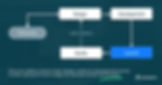
Each phase builds on the last. User feedback after launch feeds directly back into design and development for the next iteration.
Discovery and Strategic Planning
Before any code is written, the team defines the core problem the product solves, identifies the target user, maps must-have features (and explicitly excludes nice-to-haves), selects the technology stack, and produces a technical roadmap.
This phase typically takes two weeks and prevents the most expensive mistake in MVP development: building the wrong thing.
UX/UI Design and Prototyping
Wireframes and interactive prototypes are created and validated with the client before development begins. The design phase catches usability issues and feature gaps that are cheap to fix in a prototype and expensive to fix in code.
The client reviews and approves the design before the team writes a single line of production code.
Development and Quality Assurance
The product is built in agile sprints, typically two-week cycles. Each sprint produces a working increment that the client reviews.
QA is embedded throughout development, not added at the end. Regular demos and feedback loops ensure the product stays aligned with the client's vision and that problems are caught early.
Launch and Post-Release Support
After deployment, performance is monitored, user behavior is tracked through analytics, and early feedback informs the next iteration cycle. The launch is the beginning of the learning process, not the end of the engagement.
From Minimum Viable to Minimum Valuable Product
The MVP validates whether the product can work. The next phase validates whether it matters. This transition requires using early data (engagement metrics, retention, conversion) and user feedback to identify which features drive value and which are unused, where users struggle or drop off, and what users ask for that the MVP does not provide.
The feedback loop between users and the development team is what transforms a viable product into a valuable one. AI-assisted analytics tools now accelerate this process by identifying usage patterns, sentiment trends, and behavioral signals that manual analysis would miss.
Common Risks and How to Avoid Them
MVPaaS reduces many risks, but some require active management.
Confusing a Prototype with an MVP
A prototype demonstrates a concept. An MVP is a functional, shippable product that generates real user data. Providers who deliver a clickable demo and call it an MVP are not delivering MVPaaS. The deliverable must be a working product deployed to real users.
Scope Creep and Feature Bloat
Adding features beyond the core value proposition undermines the purpose of the MVP. Every feature added extends the timeline and increases cost without improving the quality of learning. A good MVPaaS partner enforces scope discipline, pushes back on feature requests that do not serve the core hypothesis, and keeps the team focused on what needs to be validated first.
Choosing the Wrong Partner
Low-quality providers may overpromise on timelines, use outdated technology, or lack the QA processes needed to deliver a reliable product. Due diligence on track record, portfolio, client references, and technical approach is essential before signing.
How to Choose the Right MVPaaS Provider
The provider determines the quality of the product and the speed of the engagement. Evaluate on three dimensions.
Evaluating Portfolio and Industry Experience
Review past projects for design quality, technical decisions, and measurable outcomes. Ask whether the provider has built products similar to yours.
Providers that build their own products (not just client work) often bring stronger product judgment because they understand the full lifecycle from the founder's perspective.
Assessing Team Size, Location, and Tech Fit
A team that is too small may lack flexibility when priorities shift. A team that is too large may not offer personalized attention. Consider the technology stack (does the provider work with the tools your product requires?), time zone compatibility (can you communicate in real time?), and communication culture (how do they handle feedback, scope changes, and disagreements?).
Understanding Pricing Models and Inclusions
Compare quotes based on what is included, not just the total price. Look for transparent, role-based billing that shows you exactly what you are paying for.
Red flags include vague deliverable definitions, pricing that does not account for QA or project management, and quotes that seem significantly below market rate for the scope described.
The Role of AI in Modern MVP Development
AI tooling is changing how MVPs get built, but the impact depends entirely on how the team uses it. McKinsey's analysis of nearly 300 companies found that the top-performing organizations achieve 16 to 30% improvements in productivity, time to market, and customer experience, with 31 to 45% gains in software quality.
So, the critical finding is that handing developers AI tools alone does not move the needle. The gains come from teams that embed AI across the full development lifecycle, from ideation and requirements through testing and deployment, and restructure their workflows around it.
For MVPaaS teams, this means AI accelerates specific parts of the build: generating boilerplate code for authentication and CRUD operations, producing test suites alongside feature code, and scaffolding initial UI components.
The architectural decisions, business logic, security design, and quality assurance still require experienced engineers. A well-equipped MVPaaS provider in 2026 uses AI to compress the repetitive work while keeping senior engineers focused on the decisions that determine whether the product works.
Is MVPaaS Right for You?
MVPaaS is a practical path for teams that need speed, expertise, and a structured process to move from idea to market-ready product. It eliminates the months of hiring that delay internal development, provides the cross-functional team that freelancer engagements lack, and offers more technical depth than no-code platforms can deliver.
The right provider operates as a product co-creation partner rather than a code vendor. They challenge assumptions, enforce scope discipline, and build systems designed to scale beyond the MVP phase.
If you’re building your first product, connect with us to take it from concept to launch with an experienced team that builds MVPs designed to validate ideas and scale into full products.
Frequently Asked Questions
How long does it take to build an MVP with an MVPaaS provider?
A typical MVP takes 8 to 14 weeks depending on complexity. The process includes discovery (2 weeks), design (2 to 3 weeks), development (4 to 8 weeks), and QA (embedded throughout). A well-scoped project with a clear brief shortens delivery time significantly. Complex products with AI features or compliance requirements may take 16 to 24 weeks.
How much does MVP as a Service cost?
Pricing varies based on team size, tech stack, and project scope. Most custom-coded MVPs through an MVPaaS provider fall in the $25k to $80k range. Hiring developers and engineers from Latin America can bring that down to roughly $20k to $60k, depending on experience and coordination overhead. Simple products cost less, while AI-powered or compliance-heavy builds cost more. Transparent, role-based billing where you can see exactly what each team member contributes is a strong sign of a trustworthy provider.
What is the difference between an MVP and a prototype?
A prototype is a visual or clickable demonstration of a concept. An MVP is a fully functional, deployed product that real users interact with. Only an MVP generates real user data, validates market assumptions, and provides the evidence needed to justify further investment.
Do I need a technical background to work with an MVPaaS team?
No. MVPaaS is designed for founders who do not have technical expertise. A good provider handles all technical decisions and communicates progress in plain language, with regular demos and sprint reviews. The client's role is to provide product vision, make business decisions, and participate in feedback loops.
Can the MVPaaS team continue developing the product after launch?
Yes. Most reputable providers offer post-launch development and iteration. Keeping the same team after launch preserves the codebase knowledge, product context, and user feedback understanding that the team accumulated during the MVP build. This continuity accelerates the transition from MVP to full product.