Computer Vision in Retail: Use Cases, Benefits & Examples

Picture this: You walk into a store, grab what you need, and simply walk out, no checkout lines, no fumbling for your wallet, no awkward small talk with the cashier. Sounds like science fiction? Welcome to the reality of computer vision in retail, where AI-powered cameras are quietly revolutionizing the shopping experience while you browse.
This AI-powered technology analyzes visual data in real-time, transforming everything from inventory management to customer experience. Unlike traditional retail analytics that rely on purchase data after the fact, computer vision provides immediate insights into customer behavior, operational efficiency, and store performance. In this comprehensive guide, we'll explore the key applications driving retail innovation, the tangible benefits retailers are seeing, and practical steps for implementation.
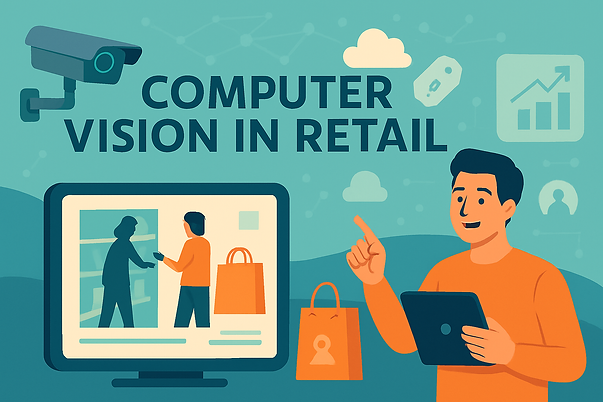
What is Computer Vision in Retail?
Remember when "analytics" meant counting how many people bought something and hoping they'd fill out a survey? Those days are gone. Computer vision in retail represents a fundamental shift from reactive to proactive business intelligence. While traditional retail relied on point-of-sale data and customer surveys to understand shopping patterns, computer vision provides real-time visual intelligence that captures every interaction within the store environment.
Definition and core technologies
Computer vision combines artificial intelligence, machine learning, and image recognition to interpret visual information from cameras and sensors throughout retail spaces. The technology stack typically includes object detection algorithms that can identify products, people, and behaviors; edge computing devices that process data locally for faster response times; and sensor fusion systems that combine multiple data sources for more accurate insights.
In practice, this might look like cameras that automatically detect when a shelf is running low on popular items, sensors that track how customers move through different store sections, or AI systems that can identify when someone needs assistance based on their body language and movement patterns.
How it differs from traditional analytics
Traditional retail analytics operate on historical data – you learn what happened after customers have already left the store. Computer vision provides real-time behavioral insights that capture the 95% of customer interactions that never result in a purchase. Instead of knowing only that a customer bought shampoo, retailers can now understand which displays they looked at, how long they spent comparing products, and what path they took through the store.
This shift from transactional to behavioral data enables proactive decision-making. Store managers can adjust displays in real-time based on customer engagement, restock popular items before they run out, and identify bottlenecks in customer flow as they happen.
Key Applications of Computer Vision in Retail
Frictionless shopping and self-checkout
Amazon Go pioneered the concept of "just walk out" shopping, where customers simply pick up items and leave without traditional checkout. This technology uses hundreds of cameras and sensors to track what customers take from shelves, automatically charging their accounts when they exit.
Beyond the flagship Amazon Go stores, retailers like 7-Eleven and Circle K are implementing similar cashierless checkout systems in select locations. These systems reduce wait times, improve customer satisfaction, and allow retailers to operate with fewer staff members while maintaining service quality.
Autonomous inventory management
Smart shelves equipped with weight sensors and cameras can automatically detect when products are running low and trigger reordering systems. Walmart has deployed shelf-scanning robots in hundreds of stores that patrol aisles, identifying out-of-stock items and price discrepancies with 50% greater accuracy than manual checks.
This technology addresses one of retail's biggest challenges – out-of-stock situations that cost retailers an estimated $1.1 trillion globally each year. Automated inventory monitoring ensures popular products stay available while reducing the labor costs associated with manual stock checking.
Customer behavior and engagement analysis
Computer vision systems can track where customers look, how long they spend examining products, and which displays generate the most engagement. This data helps retailers optimize product placement and store layouts for maximum impact.
Fashion retailer Uniqlo uses heat-mapping technology to understand which mannequins and displays attract the most attention, then adjusts their visual merchandising accordingly. This data-driven approach to store design has helped increase conversion rates and average transaction values.
In-store heat mapping and traffic flow
Retail heatmaps reveal the most and least visited areas of a store, helping managers optimize everything from staff scheduling to promotional placement. High-traffic zones become prime real estate for featured products, while low-traffic areas might benefit from attention-grabbing displays or strategic repositioning of popular items.
Target uses computer vision to analyze customer traffic patterns and optimize store layouts. They've found that even small adjustments to product placement based on traffic flow data can increase sales by 10-15% in affected categories.
Loss prevention and security monitoring
Modern loss prevention goes beyond traditional security cameras. AI-powered systems can identify suspicious behaviors like concealing merchandise, removing security tags, or unusual movement patterns near high-value items. These systems alert security personnel to potential issues while they're happening, rather than discovering theft after the fact.
Home improvement retailer Lowe's implemented computer vision security systems that reduced shrinkage by 25% while decreasing false alarms by 40%. The system learns normal shopping behaviors and only alerts staff to genuinely suspicious activities.
Augmented reality and virtual try-ons
Beauty brands like Sephora and L'Oréal use AR mirrors and smartphone apps that let customers virtually try on makeup, hair colors, and accessories. This technology improves the shopping experience while reducing product returns and increasing customer confidence in their purchases.
Eyewear retailers like Warby Parker have seen significant success with virtual try-on technology, reporting that customers who use AR features are three times more likely to make a purchase and have 30% lower return rates.
Personalized in-store marketing
Digital displays can change content based on who's looking at them. A display might show athletic wear promotions when it detects a customer in workout clothes, or highlight premium products when sensors indicate a customer spending significant time in that section.
Luxury retailer Burberry uses computer vision to recognize VIP customers when they enter the store, automatically updating digital displays with personalized product recommendations and enabling staff to provide tailored service experiences.
Backroom operations and quality control
Computer vision streamlines behind-the-scenes operations by automating quality control, sorting, and inventory management tasks. Systems can inspect incoming merchandise for damage, sort products by type or size, and verify that orders are packed correctly before shipping.
Grocery chain Kroger uses computer vision in their distribution centers to automatically inspect produce quality and sort items by ripeness, ensuring optimal freshness when products reach store shelves.
Benefits of Using Computer Vision in Retail
Improved operational efficiency
Computer vision automates routine tasks that traditionally required significant human time and attention. Inventory tracking, security monitoring, and customer flow analysis all become automated processes that free up staff for higher-value customer service activities.
Retailers implementing comprehensive computer vision systems report 20-30% reductions in time spent on manual inventory checks and store audits, allowing team members to focus more on customer interaction and sales activities.
Enhanced customer experience
Customers benefit from shorter wait times, better product availability, and more personalized service. Frictionless checkout options reduce frustration, while better inventory management means customers are more likely to find what they're looking for.
Retailers using computer vision for customer experience optimization report improvements in customer satisfaction scores, with some seeing increases of 15-25% in post-visit survey ratings.
Real-time insights and faster decisions
Store managers can respond immediately to changing conditions rather than waiting for end-of-day reports. If cameras detect unusual customer traffic patterns or inventory issues, managers can adjust staffing or restock products in real-time.
This immediate responsiveness has helped retailers capture sales opportunities they would have previously missed and address operational issues before they impact customer experience.
Data-driven merchandising
Visual analytics reveal which products customers interact with most, how they navigate store layouts, and what displays generate the highest engagement. This information enables more effective product placement and promotional strategies.
Fashion retailers using computer vision merchandising insights report 10-20% increases in conversion rates on featured products and more efficient use of prime display space.
Challenges and Considerations
Data privacy and ethical concerns
Computer vision systems collect detailed information about customer behavior and movement patterns. Retailers must navigate privacy regulations like GDPR and CCPA while maintaining customer trust. Many successful implementations focus on anonymized data collection and clearly communicate what information is being gathered and how it's used.
Best practices include providing clear privacy notices, allowing customers to opt out of certain data collection, and implementing strong data security measures to protect customer information.
Integration with existing retail systems
Most retailers have established POS systems, inventory management platforms, and customer relationship management tools. Computer vision systems must integrate seamlessly with these existing technologies to provide value without disrupting current operations.
Successful implementations often use middleware and API connections to bridge computer vision insights with existing retail management systems, ensuring data flows smoothly between platforms.
Cost and scalability
Initial investment in computer vision technology can be significant, including hardware installation, software licensing, and staff training costs. However, retailers can start with pilot programs in single locations or specific use cases before expanding system-wide.
Cloud-based computer vision services offer more flexible pricing models and easier scalability compared to on-premise solutions, making the technology more accessible to smaller retailers.
Getting Started with Computer Vision in Retail
Tools and platforms available
Several platforms make computer vision accessible to retailers of all sizes. Amazon Web Services offers Panorama for edge-based computer vision applications, while Microsoft Azure provides pre-built retail analytics tools. Open-source options like OpenCV allow for custom development, while specialized retail SaaS platforms offer turnkey solutions for specific use cases like inventory management or customer analytics.
Many retailers start with solutions from companies like Trax, AiFi, or Standard Cognition that specialize in retail computer vision applications and provide end-to-end implementation support.
Steps for implementation
Successful computer vision implementation follows a structured approach. Start by identifying specific business goals and pain points that computer vision can address. Next, evaluate different vendors and platforms based on your technical requirements and budget constraints.
Begin with a pilot program in one location or for one specific use case. This allows you to test the technology, train staff, and refine processes before expanding. After proving value in the pilot, develop a rollout plan for broader implementation while continuously measuring ROI and making improvements.
Best practices for long-term success
Track key performance indicators from the beginning to demonstrate value and guide optimization efforts. Invest in staff training to ensure team members can effectively use new tools and interpret computer vision insights.
Plan for iterative improvements as the technology evolves and your understanding of its capabilities deepens. Maintain strict data compliance practices and regularly review privacy policies to stay current with regulations.
Real-World Examples and Case Studies
Retail brands leading the way
Amazon continues to push the boundaries with Amazon Go stores and their "Just Walk Out" technology, now licensed to other retailers. Walmart has deployed thousands of shelf-scanning robots and uses computer vision for inventory management across their supply chain.
European retailer Tesco uses computer vision for self-checkout monitoring and loss prevention, while luxury brands like Burberry integrate the technology with personalized customer service platforms.
For a detailed look at how computer vision transforms specific retail operations, explore our comprehensive case study showcasing real-world implementation and measurable results.
Measurable outcomes and ROI
Retailers implementing computer vision report significant measurable improvements. Loss prevention systems typically reduce shrinkage by 15-30%, while automated inventory management decreases out-of-stock situations by 20-25%.
Customer experience improvements are equally impressive, with retailers seeing 10-20% increases in customer satisfaction scores and 15-25% improvements in operational efficiency metrics. These improvements typically result in ROI within 12-18 months of full implementation.
FAQs
How is computer vision used in business?
Computer vision finds applications across many industries, from manufacturing quality control to healthcare diagnosis. In retail specifically, it's used for inventory management, customer behavior analysis, loss prevention, and creating frictionless shopping experiences. Other industries use computer vision for autonomous vehicles, medical imaging, and industrial automation.
Is computer vision a dead field?
Computer vision is far from dead – it's experiencing rapid growth, especially in edge computing and real-time applications. The global computer vision market is projected to grow from $15.8 billion in 2023 to over $41 billion by 2030. Advances in AI processing power and decreasing hardware costs are making computer vision more accessible and practical for businesses of all sizes.
What are some examples of computer vision?
Common computer vision applications include facial recognition in security systems, automated shelf scanning in retail stores, heat-mapping for customer traffic analysis, gesture recognition for interactive displays, and augmented reality try-on experiences for fashion and beauty products. Industrial applications include quality control inspection and robotic navigation systems.
What is computer vision in inventory management?
Computer vision in inventory management uses cameras and AI to automatically monitor shelf stock levels, detect when products are running low, and trigger reordering systems. This technology can identify out-of-stock situations in real-time, verify that shelves are properly stocked and organized, and even detect pricing errors or misplaced products. The result is better product availability, reduced labor costs, and more accurate inventory data.